A structured way to describe where you are now
Before changing a training routine, it helps to describe the starting point in plain terms: what a typical week looks like, which movements feel comfortable, where energy dips and what the next twelve weeks need to accommodate. This guide offers a set of reflection steps for adults over 35.
It is an educational exercise. It does not diagnose, rate fitness or predict results, and it is not a medical screening. Anyone with symptoms, a known condition or a recent injury should speak with a qualified clinician first. Read the disclaimer for the full scope.
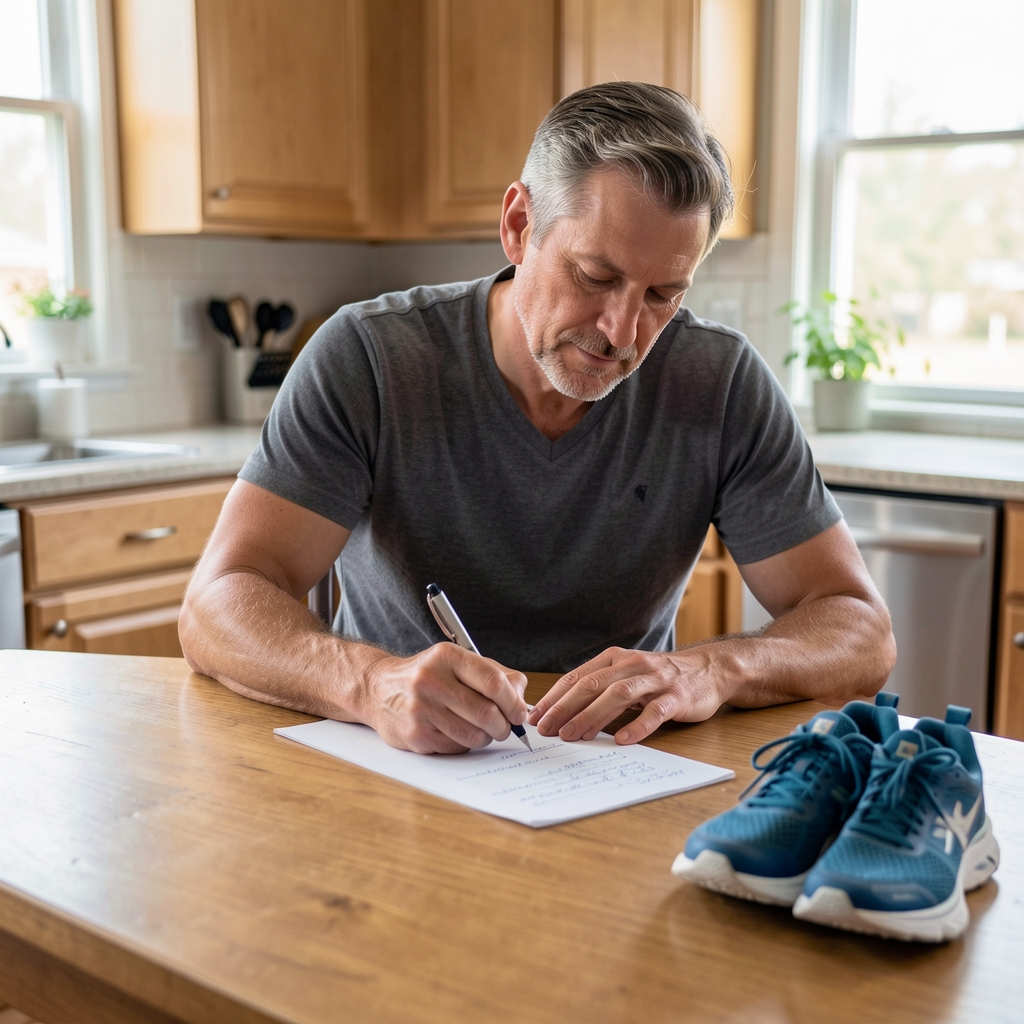
Five reflection steps
- Describe your week. List work hours, commuting, family commitments and sleep. Training must fit around these, so an honest picture comes first.
- Note current activity. Record the sessions you already do, including walking and cycling for transport, with approximate durations.
- Check movement comfort. Try everyday patterns such as rising from a low chair, climbing two flights of stairs and carrying a bag across a room. Write down which feel easy, which feel effortful and which cause discomfort.
- Identify constraints. Mention old injuries, equipment access, travel and the time of day you have the most energy.
- Define a modest goal. Choose one observable aim, such as walking for forty minutes without stopping, and decide how you will notice progress.
Decision matrix: what to focus on first
The table pairs common starting situations with a sensible area of attention. It is a thinking aid, and it does not replace individual guidance.
| Starting situation | Area to consider first | Why it matters | Read next |
|---|---|---|---|
| Returning after a long break | Regular low-intensity activity | Builds routine and tolerance gradually | Training |
| Stiffness in the morning | Controlled mobility work | Makes everyday ranges more usable | Mobility |
| Long workdays, short sleep | Rest and scheduling | Training tolerance depends on recovery | Recovery |
| Regular training, unclear plan | Record keeping and review | Patterns become visible over weeks | Methods |
When to pause and seek advice
Chest discomfort, unusual breathlessness, dizziness, fainting or sudden joint pain are reasons to stop and speak with a qualified health professional before continuing. This guide cannot judge such symptoms and should not be used to do so.
Questions to write down
- What does a typical Tuesday look like from waking to sleep?
- Which physical tasks in my week feel harder than they did five years ago?
- What would I like to do more easily in a year, in my own words?
- Which days are realistic for training, and for how long?
- Who could support me, whether a friend, a coach or a clinician?
- Keep the notes private; there is no form to send to Nebula.
- Revisit the answers after six weeks and adjust the plan if circumstances have changed.

Simple observations, not scores
Some readers like to add a few observations that repeat easily: how many minutes of steady walking feel comfortable, how many stair flights can be climbed while still speaking in sentences, or how the lower back feels after sitting for an hour. These are notes, and they are not benchmarks to beat.
Compare each entry with your own earlier entry and not with other people. A change in routine, sleep or stress can shift results from week to week, so a single reading rarely means much. The methods page explains how the desk thinks about measurement.
A good assessment makes the next decision clearer. It does not need to produce a number to be worth the effort.
Questions about this guide
Write to the editorial desk at Jalan Cendrawasih No. 45, Duren Sawit, Jakarta Timur 13440, Indonesia, or telephone +62 856 9317 4825 during business hours. Replies are sent within seven business days.
Contact the desk Read the FAQ