Aerobic base
The foundation of steady, lower-intensity work that supports longer efforts. It is usually built over weeks and months, and it is discussed in more detail in the training section.
Training writing can feel like a private language. This glossary explains the terms Nebula uses across its articles, from aerobic base to progressive overload, in short and neutral definitions. Where a term is contested, the entry says so.
Definitions are educational. They do not describe a prescription for any individual, and readers with health concerns should consult a qualified professional. Related reading is gathered in methods and physiology.
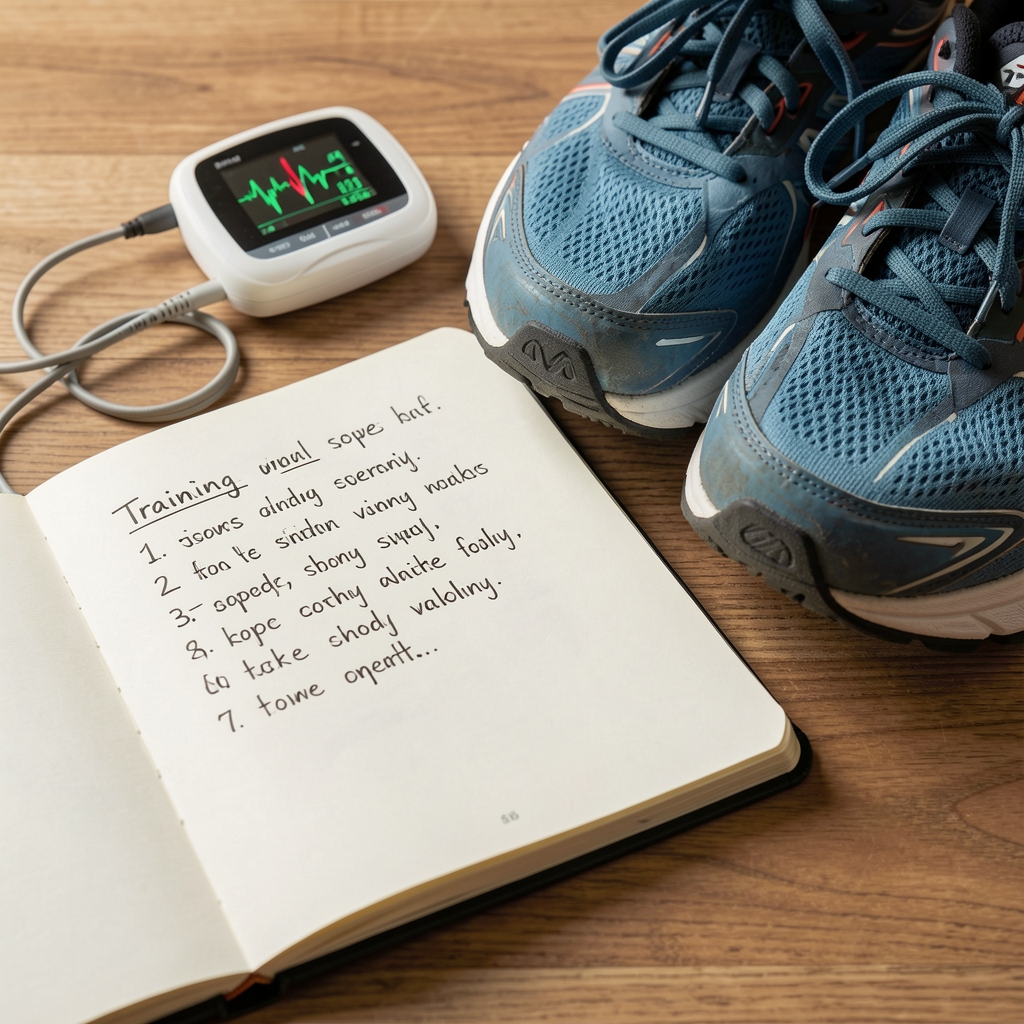
The foundation of steady, lower-intensity work that supports longer efforts. It is usually built over weeks and months, and it is discussed in more detail in the training section.
The highest rate at which the body can use oxygen during hard exercise. Laboratory measurement is precise, whereas wrist-worn estimates vary and should be treated as rough indications.
Ranges of heart rate used to describe effort. Different systems use three, five or seven zones, so a number from one scheme cannot be compared directly with another.
The intensity above which blood lactate accumulates faster than it can be cleared. In practice it is often described as the pace that feels “comfortably hard”.
The number of beats per minute at complete rest, ideally measured on waking. Day-to-day variation is normal, and a single reading says little.
A simple check in which the ability to speak in full sentences indicates a moderate effort. It requires no equipment and works across ages.
Gradually increasing the demand placed on the body, through load, repetitions or complexity, so that adaptation continues. The increase is small and planned, not abrupt.
Exercise that uses movement patterns found in daily life, such as squatting, hinging, pushing, pulling and carrying. The term is used loosely, so Nebula always states which movements are meant.
The distance a joint can move in a given direction. Mobility work aims to use the range available in a controlled way, as discussed on the mobility page.
A self-reported number, often on a scale from one to ten, describing how hard an effort feels. It is subjective yet useful, particularly alongside heart rate.
An estimate of how many more repetitions could have been completed with good form. Two in reserve means two further clean repetitions were possible.
A planned, lighter period in a training plan that allows accumulated fatigue to settle before work resumes.
| Term | Short meaning | Common misunderstanding |
|---|---|---|
| Heart-rate variability | Variation in time between heartbeats | That a higher figure is always better for every person |
| Readiness | A general sense of capacity to train on a given day | That an app score replaces how you actually feel |
| Training load | The combined volume and intensity of recent sessions | That a single number captures stress from work and sleep |
| Supercompensation | A model in which capacity rises after adequate rest | That it works on a fixed schedule for everyone |
More on rest practices is available in the recovery section.
A definition is useful only if two people reading it would picture the same thing. When they would not, the entry should say so.
The glossary is maintained by the editorial desk and reviewed twice a year, most recently on 1 October 2026. Readers are encouraged to point out missing terms, unclear wording or a reference that deserves an update.
Corrections are acknowledged within seven business days, and substantive changes are listed with a date at the end of the entry. Write through the contact page, or telephone +62 856 9317 4825 during business hours. The editorial office is at Jalan Cendrawasih No. 45, Duren Sawit, Jakarta Timur 13440, Indonesia.

Move from definitions to applied explanations in the journal and the research notes.
Open the journal Read research notes